





0
liters/batch
Media Manufacturing Capacity
0
liters/batch
Resins Manufacturing Capacity
Online Service
Tel.:
(0575) 8070 9355
Mail:
support@yskbio.com
service qrcode
技术专家
Related
ND Media(Newcastle Disease)
  • ND Media(Newcastle Disease)
  • 1/1
  • ND Media(Newcastle Disease)

ND Media(Newcastle Disease)

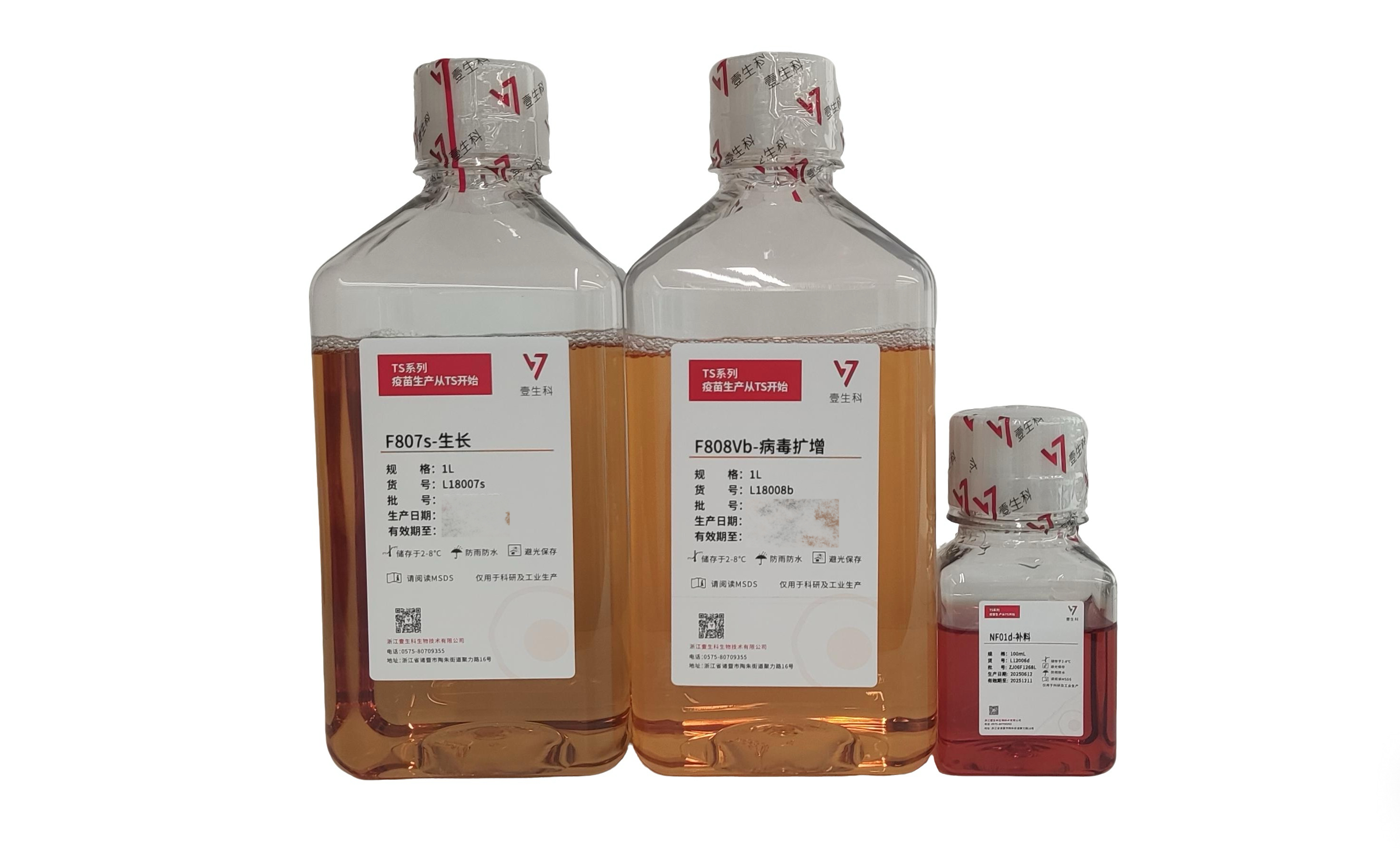
ND (Newcastle Disease) medium is a universal serum-free total suspension medium for F11 cells, which is used in the production of Newcastle disease vaccine. The medium is matched with optimized modified cells, with higher antigen yield and immunogenicity, and has the characteristics of short vaccine production cycle, high production stability, and suitable dilution and poisoning process.
Features Serum-Free
Product Type Liquid, Powder, Cell growth, Virus amplification, Basal, Feed
Pack Size 100mL 500mL 1L 5L 10L 50L 100L 定制
Apply For Free Trial
DetailOrder InformationDocuments


Product Name

Application

F807s-growth

Cell growth Media

F808Vb-Virus amplification

Virus amplification Media

NF01d-Feed

Cell Feed Media

1. Long-term stable passage, high-density growth

ND-1.png


2. Faster growth rate, higher density, and longer maintenance time

ND-2.png

3. The YSK process produces Newcastle disease, which is superior to competing products and comparable to the traditional chicken embryo process

20250612

Product Name

Cat. No.

Form

Pack Size

F807s-growth

Y1807s

Powder1L 5L 10L 50L 100L Customized

L18007s

Liquid500mL 1L
F808Vb-Virus amplification

Y1808b

Powder1L 5L 10L 50L 100L Customized

L18008b

Liquid500mL 1L
NF01d-Feed

Y1206d

Powder1L 5L 10L 50L 100L Customized

L12006d

Liquid

100mL   500mL 1L


1. Product Overview

F807s Growth is a general-purposesuspension culture medium. It is widely used for animal vaccine production.

2. Ordering Information

Table 1. Ordering Information

Product Name

Liquid

Powder

Cat. No.

Pack Size

Cat. No.

Pack Size

F807s Growth

L18007s

1L

Y1807s

1L/5L/10L/50L/100L

3. Product Specifications

Table 2. F807s Growth medium ProductSpecifications

Physicochemical Properties

Appearance

Clear pale yellow liquid

Uniform fine powder

pH

6.80-7.20

Osmolality

280-320mOsm/kg

Endotoxin

<2 EU/mL

Cell Culture Properties

Applicable Cell Line

Animal Cells

Doubling Time

≤28h

Shelf Life

Shelf Life (Powder)

18 months

Shelf Life (Liquid)

12 months

4. Intended Use

For research and industrialproduction use only. Not for use in humans.

5. Preparation Procedure

F807s Growth mediumconsists of one component:

Table 3. F807s Growth FormulationQuantities

Component

Formulation Quantities

F807s Growth

28.15g/L

F807s Growth PreparationInstructions:

5.1 Determine the total preparationvolume. Select a preparation vessel with a capacity greater than the totalvolume.

5.2Add ultrapure water or Water for Injection equal to approximately 80% of thefinal preparation volume to the container. Start stirring and add the mediumpowder at the amount specified in the formulation. Mechanical stirring for atleast 70 min, until the powder has completely dissolved, is recommended.

5.3Add ultrapure water or Water for Injection to the final target volume, then mixmechanically for 10 min.

5.4.After bringing the medium to its final volume, measure the pH. No adjustment isrequired if it is within the normal range of 6.8-7.2. If the pH is outside thisrange, adjust it with 1 M HCl or 5-10 M NaOH, then stir mechanically for 10min.

5.5Sterilize by filtration.

6. Storage Conditions

Store at 2-8°C protected from light.Transport at 0-30°C.

7. Medium Adaptation

7.1 Direct adaptation: At the startof adaptation, seed at 1.5×10⁶ cells/mL and replace the mediumdirectly with F807s Growth. Culture for 2-3 passages and proceed withsubsequent experiments once growth is stable. Once the cells show stablegrowth, seed at 1.5×10⁶ cells/mL and culture for 72 h. The celldensity reaches ≥9×10⁶ cells/mL, with viability ≥95%.

7.2 Indirect adaptation: Mix F807sGrowth with the original cell culture medium at a 1:1 ratio and culture for 2-3consecutive passages. Once growth is stable, switch to F807s Growth for another2-3 consecutive passages, then proceed with subsequent experiments once growthis stable. Once the cells show stable growth, seed at 1.5×10⁶cells/mL and culture for 72 h. The cell density reaches ≥9×10⁶cells/mL, with viability ≥95%.

7.3. Precautions:

7.3.1 Select direct or indirectmedium adaptation according to the condition of the cells.

7.3.2. During early adaptation, ifcell density is low, cells form aggregates, or other signs of instabilityoccur, select the passage method (dilution or centrifugation) based on the celldensity measured that day.

7.3.3 Passage by dilution: Calculatethe volume of cell suspension required for passage based on the cell density.Remove excess suspension and add fresh medium to the required culture volume.

7.3.4 Passage by centrifugation:Calculate the volume of cell suspension required for passage based on the celldensity. Centrifuge at 800 rpm for 5 min, discard the supernatant, andresuspend the cells in fresh medium.

7.4 Passage the cells after normal growth has been restored

Table 4. Typical Cell Growth Data

Medium

Seeding Density

(cells/mL)

Cell Density on Day 3[1]

(cells/mL)

Cell Viability (%)

Average Cell Doubling Time (h)

F807s Growth

1.5×10⁶

≥9×10⁶

≥95

≤28

Notes:

[1] Results may vary depending onthe counting method. Recommended instrument: Countstar automated cell counter,catalog number IC1000, Alit Biotech (Shanghai) Co., Ltd.

8. Cryopreservation ofSuspension Cells

8.1 Once the cells have returned totheir normal condition, expand the culture volume to prepare a cryopreservedcell bank. Prepare sufficient banked vials to ensure an adequate backup supply(recommended cryovials: Corning, catalog number 430488).

8.2 Select cells in the exponentialgrowth phase with viability ≥95% for cryopreservation. Freeze at 15-20×106cells/mL; 20×106 cells/mL is recommended.

8.3 Prepare the freezing container.Add an appropriate amount of isopropanol to the controlled-rate freezingcontainer and prechill at 4°C.

8.4. Prepare freezing medium: 70%culture medium + 20% FBS + 10% DMSO (imported fetal bovine serum isrecommended). Prechill the prepared medium at 4°C. Add the culture mediumfirst, followed by serum or DMSO, to prevent denaturation of active serum componentsby an excessively high local DMSO concentration.

8.5 Centrifuge the cell suspensionat 800 rpm for 5 min and discard the supernatant. Resuspend the cells in anappropriate volume of freezing medium and adjust the cell density to the targetvalue.

8.6 Quickly dispense the cellsuspension into cryovials.

8.7 Place the cryovials in acontrolled-rate freezing container and store at -80°C. After 24 h, transfer thecryovials to liquid nitrogen. After an appropriate storage period, thaw a vialand evaluate cell recovery.

9. Thawing and Recovery ofSuspension Cells

9.1 Prewarm the medium: Transfer 15mL of the applicable medium to a shake flask and place it in a 37°C CO2incubator for at least 30 min to equilibrate the medium pH and ensure thoroughprewarming.

9.2 Remove the cryovial from liquidnitrogen or a -80°C freezer and immediately transfer it to a 37°C water bath.Shake rapidly until the contents have completely thawed.

9.3 Transfer 5 mL of prewarmedmedium to a sterile centrifuge tube and add the thawed cell suspension.Centrifuge at 800 rpm for 5 min to remove DMSO from the freezing medium.

9.4 After centrifugation, remove thesupernatant and resuspend the cells in 10 mL of prewarmed medium to maintain arelatively high cell density during recovery. Transfer to the appropriate shakeflask and incubate.
